
Key takeaways
- Google says AI Overviews and AI Mode have no special requirements: a page must be indexed and eligible to show a snippet, and ordinary search basics still decide what gets used.
- OpenAI and Anthropic run search crawlers that are separate from the crawlers that gather training data, so a firm can let assistants cite its pages while refusing model training.
- AI answers repeat what the web already says about you. Matching firm facts everywhere, real attorney bios and practice pages written from your own experience give them better material.
- Your website and any chatbot on it are communications about your services, so ABA Model Rule 7.1 and your state's version of it still govern what they say.
- Search Console and Bing Webmaster Tools now report AI visibility, so 2027 planning can start from data.
A person with a legal problem used to type three or four words into Google. Many now type the whole story: my landlord kept my deposit and stopped answering, do I need a lawyer, and what will it cost. Google may reply with an AI Overview. ChatGPT may reply with a summary and a few firm names. Either answer may mention your firm, a competitor or a directory. This guide is for firm owners and marketing leads planning 2027. It explains how those answers are assembled, which parts a law firm can influence, what you can safely ignore, and how the ABA Model Rules on lawyer advertising apply when software retells your marketing to a stranger.
How an AI answer about a lawyer gets built
Most AI search tools do not answer current, local questions from memory. They look things up first. Google describes the method in its May 2026 guide for site owners: its AI features use retrieval-augmented generation, also called grounding, which means the system pulls relevant, up-to-date pages from the Google Search index, reads the specific information on them, and then writes a response with links to the pages that support it.

Google also uses what it calls query fan-out. The model breaks one question into several related searches and runs them at the same time. Google's own example is a lawn full of weeds turning into searches about herbicides, chemical-free removal and prevention. A legal question can split the same way. A question about a kept security deposit might branch into searches about the state's deposit statute, small claims procedure in the county, and tenant lawyers nearby. Each branch returns ordinary search results, and the answer is stitched together from them.
OpenAI works on a similar principle for ChatGPT's search features. Its documentation says a crawler called OAI-SearchBot is what surfaces websites in ChatGPT search results. Anthropic and Microsoft run their own search crawlers for Claude and Copilot, which later chapters cover.
The practical lesson is that an AI answer sits downstream of web pages. If the page that explains how your firm handles deposit disputes does not exist, cannot be crawled, or says nothing a tenant could use, there is nothing for the system to retrieve, and it will retrieve someone else. Google adds two details that matter for planning. AI Overviews appear only when its systems judge them to add something to classic results, so they often do not show at all, and AI Mode and AI Overviews may use different models and show different links for the same question.
Firms that already invest in search have a head start, because the inputs are mostly the same ones covered in our law firm SEO guide. The difference is in how the output is presented, and in who gets credit when a summary does the explaining.
Which legal questions bring up AI answers
Some of the clearest public data on when Google shows an AI summary comes from the Pew Research Center. Pew tracked the browsing of 900 U.S. adults during March 2025, then collected the result pages for 68,879 unique Google searches. About 18 percent of those searches produced an AI summary.
The length and shape of the query made a large difference. One- and two-word searches produced a summary 8 percent of the time. Searches of ten words or more produced one 53 percent of the time. Searches that began with a question word such as who, what, when or why produced one 60 percent of the time, and searches written as full sentences with a noun and a verb produced one 36 percent of the time.
Now think about how people search when something has gone wrong in their lives. They rarely type "estate planning attorney." They type "what happens to my mom's house if she dies without a will in Pennsylvania" or "how long do I have to file a claim after a car accident." Those are long, question-shaped searches, which is exactly where Pew found AI summaries most often.
That points to a split every firm should plan around. AI answers mostly catch people at the research stage, when they are trying to understand their problem. The hiring-stage search is different. "Divorce lawyer near me" or a firm's own name still tends to produce local results and the firm's website, which is the territory of our guide to local SEO for lawyers. A firm needs to be useful in both places: present in the research answer so its name is familiar, and easy to find and contact when the person is ready to call.
Pew's data also shows whose pages AI summaries lean on. Government sites made up 6 percent of the sources cited in summaries, compared with 2 percent of the links in standard results. For legal topics that makes sense, because statutes, court self-help pages and agency guidance are where the rules live. A law firm page earns its place beside those sources by adding what an agency page cannot: how the process feels from the client's side, what the first meeting involves, and what a person should gather before calling anyone.
What Google says about AI Overviews and AI Mode
Google has been unusually direct on this. Its help page on AI features says there are no additional requirements to appear in AI Overviews or AI Mode and no special optimizations necessary. To be shown as a supporting link, a page must be indexed and eligible to appear in Google Search with a snippet. Google also says you do not need new machine-readable files, AI text files or special schema.org markup to appear in these features.
That leaves a short list of things a firm should check, most of them settings that can be changed by accident.
- Indexing. A practice-area page that carries a noindex tag, or that Google has chosen not to index, cannot be a supporting link. The page indexing report in Search Console shows which URLs are indexed and why others are not.
- Snippet controls. Google lists nosnippet, data-nosnippet, max-snippet and noindex as the ways to limit what appears from a page, and says more restrictive settings limit how content is featured in AI experiences. A developer who added a nosnippet tag years ago to hide something has also kept that page out of AI answers.
- The Search Console setting. Google's 2026 guidance adds that a site must be included in Search generative AI features in Search Console. Its help page says inclusion is the default for every property, the switch lives under Settings, and excluding a site removes its links and content from AI Overviews, AI Mode and generative AI features in Discover. Google says the control does not change rankings.
There is a separate token called Google-Extended, which Google describes as the way to limit training and grounding in some of its other AI systems. It is not the control for Search. Some firms worry about their writing being reused by AI and decide to restrict it. That is a legitimate business decision. The point is to make it deliberately, with a clear view of the trade, and not to inherit it from a plugin or a former vendor.
One more note from the same Google page: AI feature traffic is counted inside the normal Search Console performance report under the Web search type, so it was never invisible. It was simply mixed in with everything else until Google added the separate report described later in this guide.
ChatGPT, Claude and Copilot read the web differently
Outside Google, "AI" is not one switch, and the difference matters for law firms that publish a lot of original writing.
OpenAI documents three agents. OAI-SearchBot surfaces websites in ChatGPT's search features. GPTBot gathers content that may be used to train OpenAI's foundation models. ChatGPT-User handles certain actions a person asks ChatGPT to take, and OpenAI says robots.txt rules may not apply to it because a user started the request. OpenAI states that each setting is independent, that a site can allow OAI-SearchBot while disallowing GPTBot, and that robots.txt changes take roughly 24 hours to reach its systems. It also says a site that opts out of OAI-SearchBot will not be shown in ChatGPT search answers, although it can still appear as a navigational link.
Anthropic's help center describes a parallel set for Claude. ClaudeBot relates to model training. Claude-User retrieves pages when a person's question requires it. Claude-SearchBot indexes content to improve search results, and Anthropic says blocking it may reduce a site's visibility and the accuracy of how it is represented in search answers.
For Microsoft's Copilot and the AI summaries in Bing, the reference point is Bing Webmaster Tools. In February 2026 Microsoft opened an AI Performance report there that counts citations across Copilot, Bing's AI summaries and select partner integrations, and Microsoft says it respects the preferences site owners set through robots.txt and other supported controls.
Put together, a firm has a real choice. It can keep its articles out of model training by refusing GPTBot and ClaudeBot while still letting OAI-SearchBot, Claude-SearchBot and Bingbot read the site so that assistants can cite and link to it. Or it can allow everything, or refuse everything. Each choice has a cost. Refusing the search crawlers means the assistants have less first-hand material about your firm and will lean more heavily on directories, review sites and competitors' pages when someone asks about you.
Whatever you decide, write it down, decide it per crawler, and check it once a year. Crawler names change, and new ones appear.
Letting the right crawlers in
Every website can carry a robots.txt file. It sits at the root of the domain, for example yourfirm.com/robots.txt, and it is a short list of which crawlers may visit which paths. A quick reading is the first technical task for 2027.

- Look for Disallow lines that name GPTBot, OAI-SearchBot, ClaudeBot, Claude-SearchBot, Bingbot or Googlebot, and confirm each one matches the decision from the previous chapter.
- Look for a blanket rule that blocks every crawler from the whole site. Staging sites carry these, and they sometimes travel to the live site during a launch.
- Check whether a website builder, security plugin or hosting dashboard adds its own rules. Some hosting and security products manage this file for you.
The file is not the only gate. Google's AI features page lists, among the SEO basics, making sure crawling is allowed in robots.txt and by any CDN or hosting infrastructure. Many websites sit behind a security service that screens bots before they ever reach the server. Cloudflare, one of the largest, announced on July 1, 2025 that it was changing its default to block AI crawlers unless they pay content creators. If your site uses a service like this, someone should open its bot settings and confirm what is allowed. The answer may differ from what the robots.txt file implies.
Next, make sure the important facts are readable as text. Google's guidance asks site owners to make important content available in textual form. Law firm sites often hide key information in places crawlers read poorly: a fee schedule saved as an image, practice descriptions inside a PDF brochure, attorney credentials inside a slider, or an entire site rendered by scripts that break when a bot visits. A simple test is to load the page with images turned off and ask whether a reader could still learn who you are, what you do, where you are and how to reach you.
Finally, keep the page fast and stable. Google's May 2025 advice on AI search repeats its page experience guidance: pages should display well on every device, load without long delays, and make the main content easy to tell apart from everything else. A person who taps a link inside an AI answer on a phone is no more patient than one who taps a regular result.
The firm facts every system should read the same way
When an assistant describes a law firm, it is reconciling facts from many places: the firm's site, its Google Business Profile, the state bar's directory, legal directories, review sites, old news stories and press releases. When those sources agree, the summary tends to be accurate. When they disagree, the assistant has to pick one, and it may pick the address you left in 2021.

Start with a single list of firm facts and treat it as the source of truth:
- The firm name exactly as it appears on your letterhead and bar registration, with the same punctuation everywhere.
- Every real office address, the main phone number and the hours someone answers it.
- Each attorney's full name, the states and courts where each is admitted, and the year of admission.
- Practice areas you actually take, including what you do not handle, and the languages spoken in the office.
- Your consultation policy, stated the same way on every page that mentions it.
Then check every place that repeats those facts. Google's 2026 guidance says that Google Business Profiles can help a business's details appear in AI responses as well as in other results, and its Business Profile guidelines carry rules that matter to law firms. A practitioner who works in a public-facing role may have a profile, but a practitioner should not have several profiles to cover different specialties. A rented mailing address where the firm does not actually operate, often called a virtual office, is not eligible for a profile. The business name should reflect the firm's real-world name, without marketing taglines.
The advertising rules point the same direction. ABA Model Rule 7.2(d) requires any communication under that rule to include the name and contact information of at least one lawyer or law firm responsible for its content, and the comment explains that contact information can be a website address, phone number, email address or physical office location. Comment 5 to Rule 7.1 treats firm names and trade names as communications too, and says a firm name is misleading if it implies a connection with a government agency or with a public or charitable legal services organization.
Our guide to local SEO for lawyers covers the Business Profile in more depth. For AI answers, the short version is that consistency now matters to the software that writes summaries as well as to the people comparing firms.
Practice-area pages built from your own experience
Google's 2026 guide on generative AI features makes a distinction every law firm marketer should keep in mind. It calls some content commodity content: material built on common knowledge that could come from anyone. Its example is a page titled "7 Tips for First-Time Homebuyers." It contrasts that with non-commodity content that offers an expert or experienced view beyond the ordinary, using the example of a homeowner explaining why they waived an inspection and what they learned from looking inside the sewer line.

The legal web is full of commodity pages. "What to do after a car accident" appears in very similar form on a great many firm sites. An AI system that reads ten of them learns nothing new from the eleventh, so it has little reason to cite it. Google's guide says its AI systems look at a variety of sources, which is why a distinct point of view helps a page stand out.
What does non-commodity look like for a law firm? It is the material only your lawyers can write:
- How your firm actually runs a matter of this type, step by step, from the first call to the closing letter.
- What you ask at the first meeting and which documents you want people to bring.
- Local procedure a newcomer would not know, such as how filings and hearings typically proceed in the courts where you practice, described in general terms.
- The questions clients ask most often in your office, answered in plain words.
- When a person probably does not need a lawyer for the problem, and where they can go instead.
That last item surprises firms, but it is the kind of first-hand judgment that reads as trustworthy to people and to machines. It also keeps the page from sounding like an advertisement in disguise.
Two guardrails apply. Pages like these are general information, not advice about a reader's situation, and they should say so plainly. And they should describe process, not predict outcomes, for reasons the Rule 7.1 chapter covers. Our list of the pages every law firm website needs shows where these pages sit in a site, and our practice area guides show how the questions differ between, say, estate planning and immigration.
Attorney bios that read as evidence
When someone asks an assistant about a specific lawyer, the bio page is often the best first-party source available. Many firm bios read like a list of adjectives. A better bio reads like a record.
Google's guidance on helpful content suggests asking who created a piece of content, how it was made and why. It encourages accurate authorship information, such as bylines where readers expect them, and it explains that its systems give extra weight to signs of experience, expertise, authoritativeness and trust on topics that can significantly affect a person's finances, safety or well-being. Legal problems fall squarely into that group.
A bio built as evidence includes the facts a careful reader would check:
- Bar admissions by state and year, plus federal courts where the lawyer is admitted.
- Education, clerkships and earlier practice experience, stated plainly.
- Languages the lawyer can actually work in with clients.
- Articles, talks and bar committee work, each with a date and a link where one exists.
- The kinds of matters the lawyer handles now, described as work performed, not results promised.
Two advertising rules shape the wording. Model Rule 7.2(c) says a lawyer may not state or imply certification as a specialist unless the certifying organization is approved by an appropriate state authority or accredited by the ABA, and the communication clearly names that organization. Comment 9 to Rule 7.2 says a lawyer is generally permitted to say they concentrate in or specialize in a field based on experience or training, but those statements remain subject to the false-and-misleading standard of Rule 7.1. Several states draw these lines more tightly than the Model Rules, so check your own state's version before you publish.
Awards and ratings deserve the same care. An assistant asked for "the best" lawyer in a city will pull superlatives from wherever it finds them. Give it facts instead: the name of the honor, who grants it, the year, and how a reader can learn what it measures. Our guide to attorney website bar compliance walks through the areas where firms most often get this wrong.
Reviews and mentions you cannot buy
AI answers often mention what other people say about a firm. Google's 2026 guide confirms that its generative features can show what is being said about products and services across the web, including blogs, videos and forum discussions. The same guide warns that seeking inauthentic mentions is not as helpful as it may seem, because its ranking systems focus on quality and other systems block spam, and the AI features depend on both.
For law firms, the advertising rules add a second reason to stay away from manufactured praise. Model Rule 7.2(b) says a lawyer may not give or promise anything of value to a person for recommending the lawyer's services, apart from listed exceptions such as the reasonable cost of advertising, the usual charges of a legal service plan or a not-for-profit or qualified lawyer referral service, and nominal gifts of appreciation that are neither intended nor reasonably expected as payment for a referral. Comment 2 defines a recommendation as a communication that endorses or vouches for a lawyer's credentials, abilities, competence, character or other professional qualities. It also notes that directory listings and group advertisements that list lawyers by practice area, without more, are not recommendations.
That distinction is useful when a vendor offers to place your firm in "best lawyers in your city" articles across the web for a fee. A plain paid listing is one thing. A paid article that vouches for your abilities raises the question the rule was written to answer, and so does a vendor that pays bloggers or forum posters to praise you. Comment 5 to Rule 7.2 allows paying lead generators only when they do not recommend the lawyer and their communications satisfy Rule 7.1, which means they must not imply that they are recommending you or that they analyzed the person's legal problem before choosing you.
The durable path is slower and cleaner. Ask satisfied clients to leave reviews in their own words, on platforms they already use, and respond to reviews in a way that protects client confidences. State rules on testimonials and review requests differ, so confirm yours first. The local SEO guide linked above covers a simple request routine that fits most firms.
Structured data that matches the page
Structured data is code that labels the facts on a page so software can read them without guessing. For a law firm, it states in a standard vocabulary that this page belongs to a legal business with a given name, address, phone number and set of attorneys.

The vocabulary comes from schema.org, which defines a type called LegalService as a business that provides legally oriented services, advice and representation, such as a law firm. Schema.org still lists an older type called Attorney, but marks it as deprecated and says LegalService is more inclusive and less ambiguous. If your site still uses the old type, that is an easy fix during a 2027 refresh.
Keep expectations accurate. Google says structured data is not required for its generative AI features and that no special schema.org markup is needed. It also calls overfocusing on structured data a misconception. The reason to use it anyway is that it helps pages qualify for rich results and gives every system a clean statement of facts that might otherwise be scattered across a page.
Google's guidance also sets one clear rule: structured data should match the visible text on the page. That rule matters a great deal for law firms, because markup can quietly say things the page does not. Common mismatches include:
- FAQ markup on questions that do not appear on the page, or with answers that differ from the visible ones.
- Review or rating markup for reviews that live on another site and are not shown on the page.
- An areaServed list that names cities or states where the firm does not practice.
- Attorney entries for lawyers who have left the firm.
Each of those can feed an AI summary a claim your visible page never made. Validate the markup after every site change, and fold it into the same review that checks the page copy. Our piece on law firm website design covers how markup, content and layout fit together in a well-built site.
What a firm can skip
Many tactics are now sold under the labels answer engine optimization (AEO) and generative engine optimization (GEO). Google's 2026 guide notes that these terms are common online and that many suggested hacks are not effective. Its position is that, for Google Search, optimizing for generative AI search is still SEO, and its 2026 guide includes a section on what you do not need to do. For a law firm budget, that list is worth reading closely.
- llms.txt and other special AI files. Google says Google Search does not use them, and that creating one will neither help nor harm your visibility there. It also says it is fine to keep one if another service you care about uses it.
- Chunking content into small fragments. Google says its systems understand pages that cover several topics and that there is no ideal page length.
- Rewriting pages in a special style for AI, or stuffing in every phrasing of a question. Google says its systems understand synonyms and general meaning.
- Buying mentions, covered in the reviews chapter above.
- Treating structured data as the main lever, covered in the chapter above.
One more item deserves its own paragraph because it can do real damage. Google warns that creating separate content for every possible variation of a search, including the fan-out queries described earlier, primarily to manipulate rankings or AI responses, violates its spam policy on scaled content abuse. That policy describes generating many pages mainly to manipulate rankings rather than help people, and it names using generative AI tools to produce many pages without adding value as an example. Google's separate note on AI-generated content repeats the point. A plan that promises hundreds of new pages, each a light rewrite of the last, is a plan to fail that policy.
AI writing tools have a place in a firm's workflow, and the bar has said so. When the Florida Bar's Board of Governors approved Ethics Advisory Opinion 24-1 in January 2024, the Florida Bar News reported its conclusion that lawyers may use generative AI only to the extent they can reasonably guarantee compliance with their ethical obligations, including the restrictions on advertising. Draft with tools if they help. Publish only what a lawyer has read, corrected and stands behind.
How Rule 7.1 applies when AI retells your marketing
The modern era of lawyer advertising began with Bates v. State Bar of Arizona, decided by the U.S. Supreme Court in June 1977. The Court held that advertising by attorneys may not be subjected to blanket suppression, and it was equally clear that advertising that is false, deceptive or misleading remains subject to restraint. It even noted that claims about the quality of legal services may be so likely to mislead as to warrant restriction, because quality cannot easily be measured or verified.
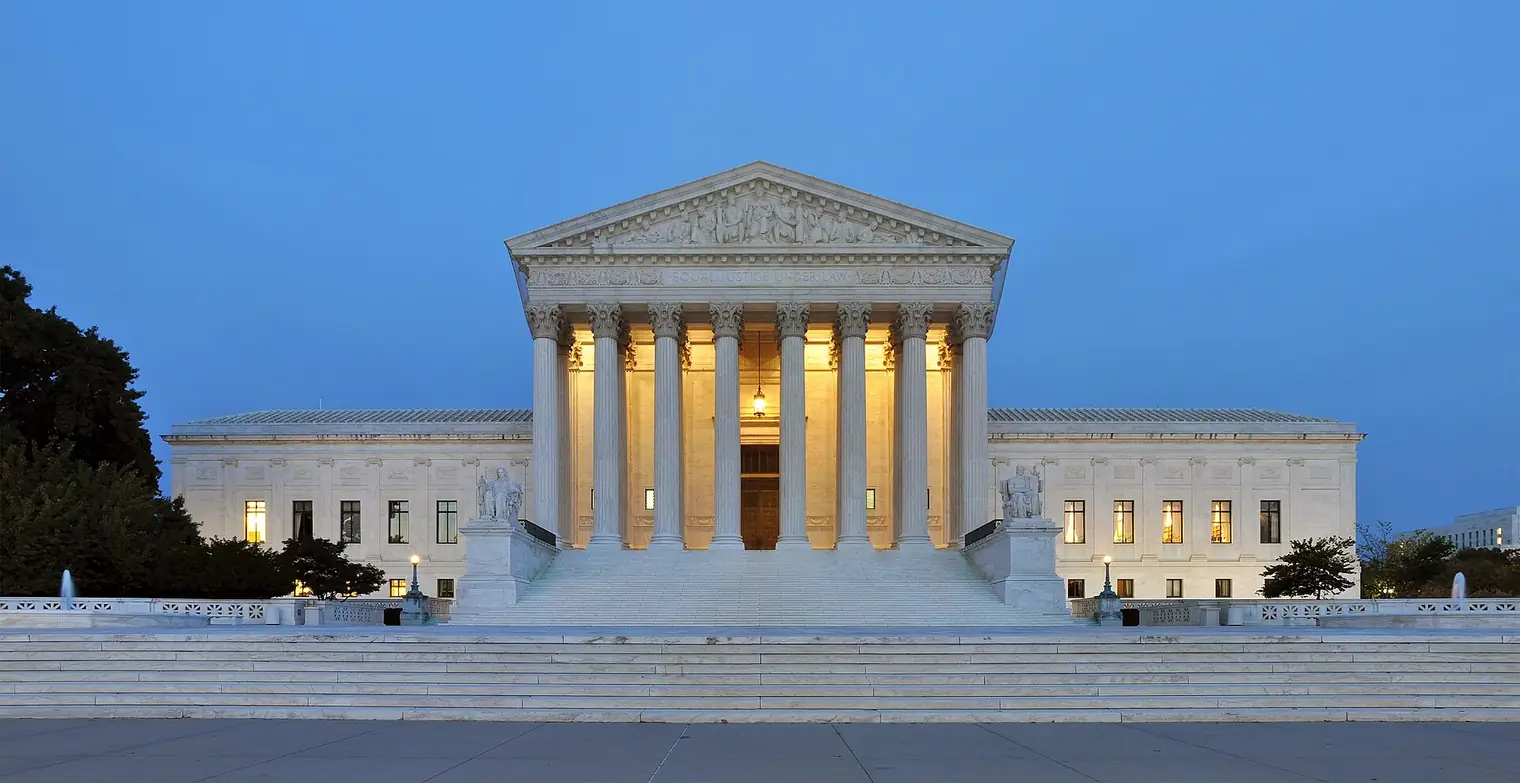
ABA Model Rule 7.1 carries that line forward in two sentences. A lawyer shall not make a false or misleading communication about the lawyer or the lawyer's services, and a communication is false or misleading if it contains a material misrepresentation of fact or law or omits a fact needed to keep the whole statement from being materially misleading. Comment 1 says the rule governs all communications about a lawyer's services, including advertising, whatever the medium.
The comments explain how true statements can still mislead. Comment 2 says a truthful statement is misleading if it is likely to lead a reasonable person to a specific conclusion about the lawyer that has no reasonable factual foundation. Comment 3 says a truthful report of past results may mislead if presented so that a reasonable person expects the same result without regard to the facts of their own case, and that unsubstantiated comparisons with other lawyers may mislead too. It adds that an appropriate disclaimer or qualifying language may prevent a statement from creating unjustified expectations.
Here is the new wrinkle. AI answers quote sentences, not pages. A results page with a large verdict in the first line and a careful qualification at the bottom may be summarized with the verdict and without the qualification. You cannot control how a third party's software excerpts you, but you can write so that each claim carries its own context:
- Put the qualifier in the same sentence or paragraph as the result it qualifies.
- Describe what happened in a matter, the facts and the work, instead of implying what will happen in the reader's matter.
- Drop comparative words such as best, top or leading unless you can substantiate them, and even then check your state's rule.
- Remove anything a reasonable reader could take as a guarantee.
The Model Rules are a template. Each state adopts its own version, and several add requirements of their own. Nothing in this guide is legal advice about your obligations. For a specific question, ask your state bar's ethics counsel or a lawyer who advises on professional responsibility.
How Rules 7.2 and 7.3 apply to AI search
Model Rule 7.2(a) is broad: a lawyer may communicate information about the lawyer's services through any media. Comment 3 lists what a lawyer may pay for under the advertising exception, including online directory listings, domain registrations, internet-based advertisements and the work of vendors such as website designers and business-development staff. That covers most of what a firm buys to be found online.
The harder questions come from new products sold as AI visibility. When a vendor offers to get your firm into AI answers, ask what the money actually buys. If it buys content the firm publishes under its own name, or advertising clearly labeled as such, it resembles the advertising and vendor costs that Comment 3 describes. If it buys third parties vouching for you, Rule 7.2(b) and its comments on recommendations come into play, as the reviews chapter explains.
Rule 7.3 governs solicitation. The Model Rule defines solicitation as a communication initiated by or for a lawyer, directed to a specific person the lawyer knows or should know needs legal services in a particular matter, offering to provide those services. Comment 1 says a communication is not a solicitation if it is directed to the general public, such as through a website or a television commercial, or if it responds to a request for information or is automatically generated in response to electronic searches. An AI answer that mentions your firm because someone asked a question looks much more like that second category than like a lawyer reaching out to a stranger.
Rule 7.3(b) bars soliciting by live person-to-person contact when a significant motive is the lawyer's financial gain, with exceptions for other lawyers, people with a family, close personal, or prior business or professional relationship, and people who routinely use the type of legal service for business. Comment 2 defines live contact as in-person, face-to-face, live telephone and other real-time visual or auditory communication, and says it does not include chat rooms, text messages or other written communications that recipients can easily disregard.
Do not read that comment as a free pass for automated outreach. Rule 7.3(c) still bars any solicitation when the person has said they do not want to be solicited, or when it involves coercion, duress or harassment. An automated sequence that keeps texting after someone says stop is a problem regardless of the channel. State versions of this rule differ, so read your own.
Chatbots and AI intake on your own website
If your firm is considering AI chat on its own site for 2027, two state bar opinions give the clearest picture of the obligations involved, and both are worth reading in full before any tool goes live.
Florida Bar Ethics Opinion 24-1, approved on January 19, 2024, addresses chatbots that talk with prospective clients. It says that to avoid confusion or deception, a lawyer must inform prospective clients that they are communicating with an AI program. It warns that the lawyer will be ultimately responsible if the chatbot gives misleading information, that a chatbot can create a prospective client relationship or even a lawyer-client relationship without the lawyer knowing, and that an overly welcoming chatbot may end up giving legal advice. It suggests screening questions to limit what the chatbot discusses.
The Oregon State Bar went into more detail in Formal Opinion 2026-208, approved by its Board of Governors in February 2026. Its answer to whether lawyers may use chatbots for marketing and intake is yes, qualified. Among its points:
- Lawyers should understand how the chatbot stores information, must confirm that information it handles is reasonably secure, and should do due diligence on the vendor and any software the vendor relies on.
- The website and chatbot should carry clear disclaimers, and the opinion calls it prudent for a responsible lawyer to be notified automatically and able to review conversations promptly.
- Information a prospective client shares through a chatbot carries duties under Rule 1.18 even if no representation follows, so the person should be entered into the firm's conflict system promptly.
- Lawyers must take care that the chatbot does not mislead about expertise, experience or past results, and does not attempt to give legal advice.
- Chatbots built on AI agents, which can act on their own, create greater risk, and the opinion suggests subjecting autonomous actions to lawyer approval.
In practice, an intake bot designed with these opinions in mind is modest. It says plainly that it is automated and not a lawyer, collects contact details, the type of matter and the names needed for a conflict check, avoids evaluating the case, and hands the conversation to a person quickly. Speed matters for a second reason too: a slow handoff loses the client, a problem our guide on why law firm websites don't convert covers in detail.
When an AI answer gets your firm wrong
When an assistant describes a firm incorrectly, the error is usually ordinary: an attorney who left, a practice area the firm dropped, an old office, or a fee policy it never had. The fix is almost always in the sources the assistant read.
- Reproduce the answer. Ask the same question in the same tool, note the date, and save a screenshot.
- Find the source. Many AI answers show the links they relied on. Open each one and look for the wrong fact.
- Correct what you control first: your own pages, your Business Profile, your state bar profile and the directory listings you can edit.
- Ask the owners of other sources to update stale pages, such as an old press release or a former firm's attorney page.
- Use the product's feedback option if it has one, describing the error and the correct fact.
Then give the systems time. Google says recrawling can take anywhere from several days to several months, depending on how often its systems decide a page needs refreshing, and Search Console lets you request a recrawl of pages you have changed. OpenAI says robots.txt changes take about 24 hours to reach its systems, which tells you about crawler access, not how quickly a corrected fact appears in answers. Check again after a few weeks and keep the dated record.
Prevention is cheaper than correction. Wrong answers often trace back to inconsistent facts, which is why the firm-facts list earlier in this guide is the first item on the 2027 plan below. When an attorney joins or leaves, when an office moves, or when the firm stops taking a type of case, update every place on that list the same week.
Firms sometimes ask whether they are responsible for what a third-party AI says about them. The Model Rules speak to communications made by a lawyer or on a lawyer's behalf, and the text does not address independent AI summaries. If the question matters for your situation, put it to your state bar's ethics counsel. What is clearly within your control is the accuracy of everything you publish.
Measuring AI visibility without guesswork
Until 2026, AI visibility was mostly guesswork and screenshots. Two first-party reports now make it measurable, and both are free.

Google announced Search Generative AI performance reports in Search Console on June 3, 2026, and says it rolled them out to all websites worldwide as of August 31, 2026. The reports show how often a site's URLs appeared in generative AI features in Search and Discover, which pages appeared, the countries and devices involved, and the trend over hourly, daily, weekly and monthly views. Google notes that the same data remains inside the overall performance report as well.
Microsoft's AI Performance report in Bing Webmaster Tools, opened as a public preview on February 10, 2026, counts how often a site is cited as a source in Copilot, in Bing's AI summaries and in some partner integrations. It shows total citations, the average number of the site's pages cited each day, page-level citation counts, trends, and a sample of the grounding queries the AI used when it retrieved the content. Microsoft says the citation counts do not indicate ranking, authority or the role a page played in an answer.
Neither report is described as covering ChatGPT or Claude, so add two low-tech measures:
- Ask every new caller and form submitter how they found you, and add an option for AI assistants such as ChatGPT, Gemini or Copilot. Train intake staff to record it the same way every time.
- Check your analytics referral report each month for visits that arrive from the assistants' own websites.
Keep a fixed set of perhaps twenty questions your clients actually ask, run them through the main assistants each quarter, and log whether your firm is named and whether the facts are right. It is not a statistically rigorous measure, but tracked the same way over a year it shows direction.
Be skeptical of tools that claim more. Google's 2026 guide says no third-party tool has access to its internal ranking or AI systems, and advises weighing any tool's advice against official guidance. Our article on how long it takes a law firm website to rank explains why search work should be judged over quarters, not weeks.
What fewer clicks mean for intake
The uncomfortable number in Pew's study is the click rate. When a Google results page included an AI summary, users clicked a traditional result in 8 percent of visits. Without a summary, they clicked one in 15 percent of visits. Links inside the summary itself were clicked in 1 percent of visits. Pages with a summary were also more likely to be the last page in a browsing session: 26 percent compared with 16 percent.
Google sees the same change differently. Its help page says that when people click from results pages with AI Overviews, the clicks are higher quality, meaning users are more likely to spend more time on the site, and it encourages owners to look at conversions and time spent on the site as well as clicks.
Both statements can hold at once. Research-stage questions may send fewer visitors, while the people who do click have already read a summary, understand their problem better, and are closer to a decision. For a law firm, that shifts attention from traffic to what happens after the click.
- The phone number should be visible and tappable on every page, on every device.
- Forms should ask only what intake needs for a first response and a conflict check.
- Someone should answer calls during posted hours, and after hours the next step should be stated plainly.
- Every inquiry should get a reply the same business day, and the firm should measure whether it does.
There is also a quieter effect. A person who sees your firm named in an AI answer may not click at all, then search your name a day later. Branded searches, calls and direct visits are where that recognition shows up, so watch them alongside the new AI reports. If your name search shows an outdated profile or a directory ahead of your own site, fix that before spending on anything new.
Fewer, better-informed visitors are only valuable if the site turns them into conversations. That is a design and staffing question as much as a search question, and it is often the quickest place to improve.
A first-quarter plan for 2027
Most of this work fits into one quarter if it is divided sensibly. Here is the order we would use for a typical small or mid-sized firm, with a partner reviewing anything that speaks for the firm.

January is for access and facts. Read robots.txt and the bot settings at your host or security service, and confirm each crawler decision on purpose. In Search Console, confirm the site is verified, check the Search generative AI setting, and look at which practice pages are indexed. Verify the site in Bing Webmaster Tools. Build the single firm-facts list and correct it everywhere: the site, the Business Profile, the state bar profile and the directories you can edit.
February is for pages. Pick the three to five practice areas that matter most to revenue and rewrite those pages from the firm's own experience, using the list in the practice-page chapter. Rebuild attorney bios as records with admissions, dates and verifiable details. Review every claim on those pages against your state's version of Rules 7.1 and 7.2, moving qualifiers next to the claims they qualify. Update structured data so it matches the visible pages.
March is for intake and measurement. If the firm uses or plans a chatbot, review it against the Florida and Oregon opinions and your own state's guidance, including disclaimers, lawyer notification and conflict entry. Add the AI assistant option to the "how did you hear about us" question. Record baselines from the Search Console and Bing reports and run your fixed question set for the first time.
After that, the work becomes routine: one strong page or substantial update a month, a quarterly check of the question set, and an annual look at crawler settings. None of it guarantees that any assistant will name your firm. No one can promise that, and Google says plainly that even a page that meets every requirement is not guaranteed to be crawled, indexed or shown. What the plan does is give every system accurate, useful material to work with, which is the part a firm controls.
If you would rather hand the technical half to a team, our build process shows how we approach a site, and our pricing page lists what each package includes.
Questions to ask a vendor selling AI visibility
If a vendor pitches AI visibility services to your firm, some of what you hear may be useful. Some may repackage the tactics Google has publicly called unnecessary, or create risk under the advertising rules. These questions separate the two quickly.
- What exactly will you publish under our name, and who at our firm approves it before it goes live?
- Who reviews the copy against our state's advertising rules, and will you change wording when our ethics review asks you to?
- Will you create or pay for reviews, mentions, forum posts or "best lawyer" articles about us? If so, who writes them and who is paid?
- How many new pages do you plan to add, and what does each one offer a reader that our existing pages do not?
- Which first-party reports will you use to show results, such as the Search Console generative AI report and Bing's AI Performance report?
- Do you promise placement in AI answers or specific rankings? On what basis?
- Will you change our robots.txt, bot settings or snippet controls, and will you explain each change to us in writing first?
- Who owns the content, the accounts and the data if we part ways?
Google's own guide answers part of the promise question for you. It says optimizing for generative AI search is still SEO, advises reviewing its guidance on evaluating third-party SEO advice, and says no third-party tool has access to its internal ranking or AI systems. A vendor that claims special access, or that guarantees placement, is making a claim nobody outside the search companies can support.
Price is a fair question too. AI visibility work overlaps almost entirely with good website and search work, so it should not cost twice. Our guide to what a law firm website costs explains what drives price in this market. When you are ready to talk through your own site, contact us.
Sources
- Google Search Central, AI features and your website
- Google Search Central, Optimizing your website for generative AI features on Google Search
- Google Search Central Blog, A new resource for optimizing for generative AI in Google Search (May 15, 2026)
- Google Search Central Blog, Introducing Search Generative AI performance reports in Search Console (June 3, 2026)
- Google Search Console Help, Search generative AI control
- Google Search Central Blog, Top ways to ensure your content performs well in Google's AI experiences on Search (May 21, 2025)
- Google Search Central, Creating helpful, reliable, people-first content
- Google Search Central, Spam policies for Google web search (scaled content abuse)
- Google Search Central, Google Search's guidance on using generative AI content on your website
- Google Business Profile Help, Guidelines for representing your business on Google
- OpenAI, Overview of OpenAI crawlers
- Anthropic, Does Anthropic crawl data from the web, and how can site owners block the crawler?
- Bing Webmaster Blog, Introducing AI Performance in Bing Webmaster Tools Public Preview (February 10, 2026)
- Cloudflare, Content Independence Day: no AI crawl without compensation (July 1, 2025)
- Pew Research Center, Google users are less likely to click on links when an AI summary appears in the results (July 22, 2025)
- American Bar Association, Model Rules of Professional Conduct, Rule 7.1 and comment
- American Bar Association, Model Rules of Professional Conduct, Rule 7.2 and comment
- American Bar Association, Model Rules of Professional Conduct, Rule 7.3 and comment
- The Florida Bar, Ethics Opinion 24-1 (January 19, 2024)
- The Florida Bar News, Board of Governors adopts ethics guidelines for generative AI use (January 23, 2024)
- Oregon State Bar, Formal Opinion No. 2026-208, Chatbots and AI Agent Communications (February 2026)
- Bates v. State Bar of Arizona, 433 U.S. 350 (1977), via Legal Information Institute
- Schema.org, LegalService
- Schema.org, Attorney
Photo credits
- Yale Law School Library Reading Room (L3) by PENG Yanan (Neo-Jay), CC BY-SA 3.0, via Wikimedia Commons.
- Law Library of the Library of Congress in the U.S. Capitol c 1895 by Unknown author, public domain, via Wikimedia Commons.
- Wikimedia Foundation Servers-8055 13 by Victorgrigas, CC BY-SA 3.0, via Wikimedia Commons.
- Harris County 1910 Courthouse Restored Houston Texas by i_am_jim, CC BY-SA 3.0, via Wikimedia Commons.
- Wolf Law Library books by Jrcla2, public domain, via Wikimedia Commons.
- Copyright Card Catalog Files by Michael Holley Swtpc6800, public domain, via Wikimedia Commons.
- Panorama of United States Supreme Court Building at Dusk by Joe Ravi, CC BY-SA 3.0, via Wikimedia Commons.
- Boone County Courthouse courtroom front by Brandonrush, CC0 public domain dedication, via Wikimedia Commons.
- A courtroom at the Cherokee County Courthouse in North Carolina, United States 02 by Harrison Keely, CC BY 4.0, via Wikimedia Commons.
- Decatur County Courthouse by Dopey9928, CC BY-SA 3.0, via Wikimedia Commons.
- Johnson County Courthouse (Indiana) - June 2022 - Sarah Stierch by Missvain, CC BY 4.0, via Wikimedia Commons.
This article is general information about marketing and professional rules as published by the sources above, current as of 2026-10-29. It is not legal advice. Rules differ by state, so check your own jurisdiction's rules and ethics opinions.